The Hidden Tax of Constant Meetings


The Hidden Tax of Constant Meetings
Meetings aren't the problem.
Unnecessary meetings are.
Most organizations don't schedule meetings because they enjoy them.
They schedule them because something else isn't working.
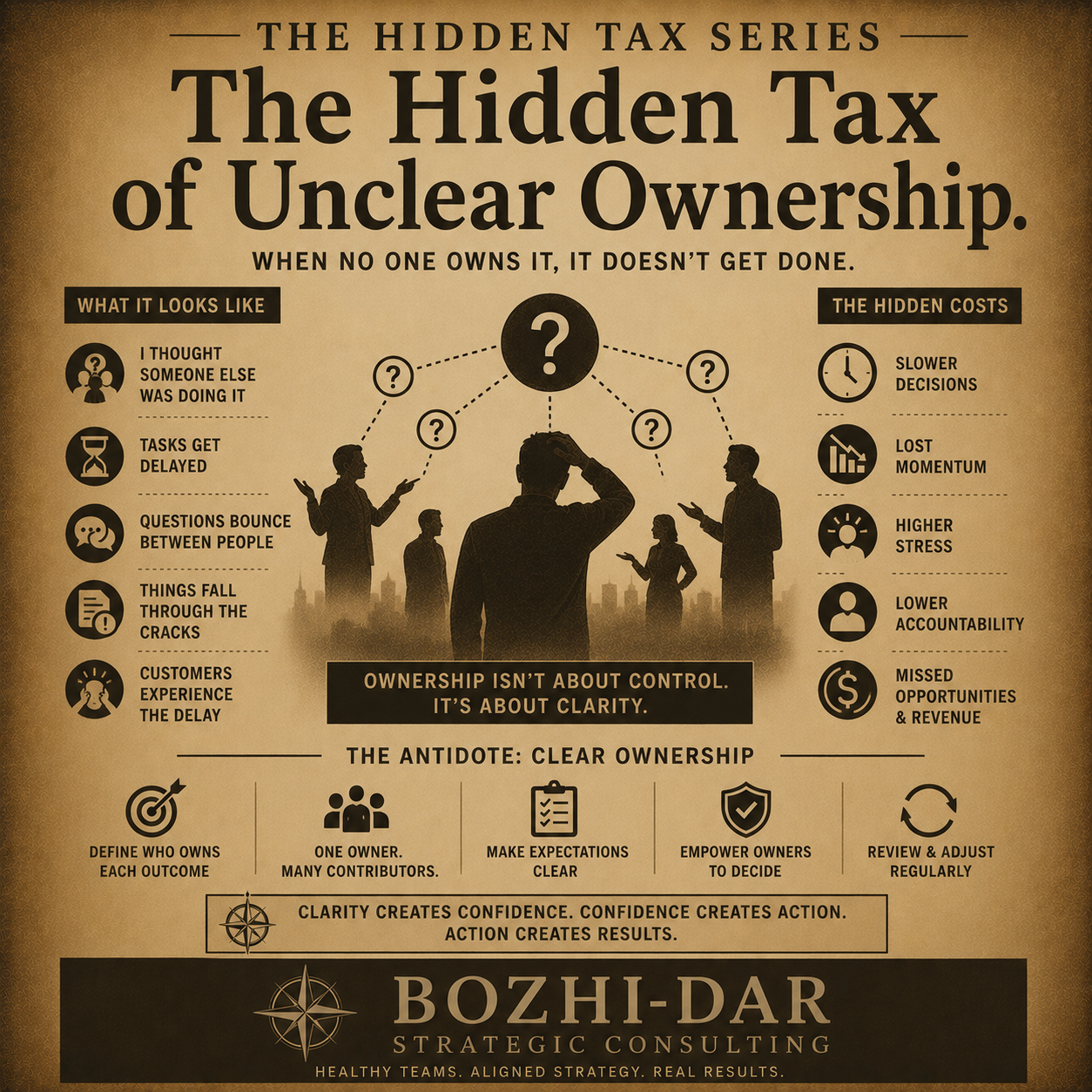
Ownership isn't clear.
Information isn't shared.
Decisions aren't trusted.
Processes aren't documented.
So another meeting feels like the safest solution.
At first, it works.
Everyone gets aligned.
Questions are answered.
The team leaves with clarity.
Then next week...
Another meeting.
And another.
Until meetings become the process instead of supporting it.
The hidden tax isn't the hour spent in the meeting.
It's everything that surrounds it.
Five people stop their work.
Everyone spends time preparing.
Conversations continue afterward.
Follow-up meetings get scheduled.
Focus is interrupted.
Momentum disappears.
A one-hour meeting can quietly consume half a day's productivity.
The irony is that meetings often exist because previous meetings didn't solve the real problem.
Instead of improving the system...
We create another conversation about it.
Healthy organizations don't eliminate meetings.
They eliminate the reasons unnecessary meetings exist.
Clear ownership reduces coordination.
Documented processes reduce explanations.
Trusted teams reduce approvals.
Better systems reduce conversations.
Every meeting should answer one question:
What decision are we making?
If the answer isn't clear...
The meeting probably shouldn't exist.
Great organizations don't communicate less.
They communicate with greater purpose.
Every conversation should move something forward.
Not simply fill the calendar.
Every business carries hidden taxes.
Constant meetings are one of the most expensive.
Not because meetings cost money.
Because they quietly fragment attention.
Before accepting the next meeting invitation...
Ask yourself:
Could this have been prevented by a better process?
Sometimes the best meeting...
Is the one that never needed to happen.
Hidden taxes rarely appear on financial statements.
They appear in slower decisions, higher stress, missed opportunities, and limited growth.
The earlier you uncover them, the cheaper they are to remove.