The Hidden Tax of Unclear Ownership

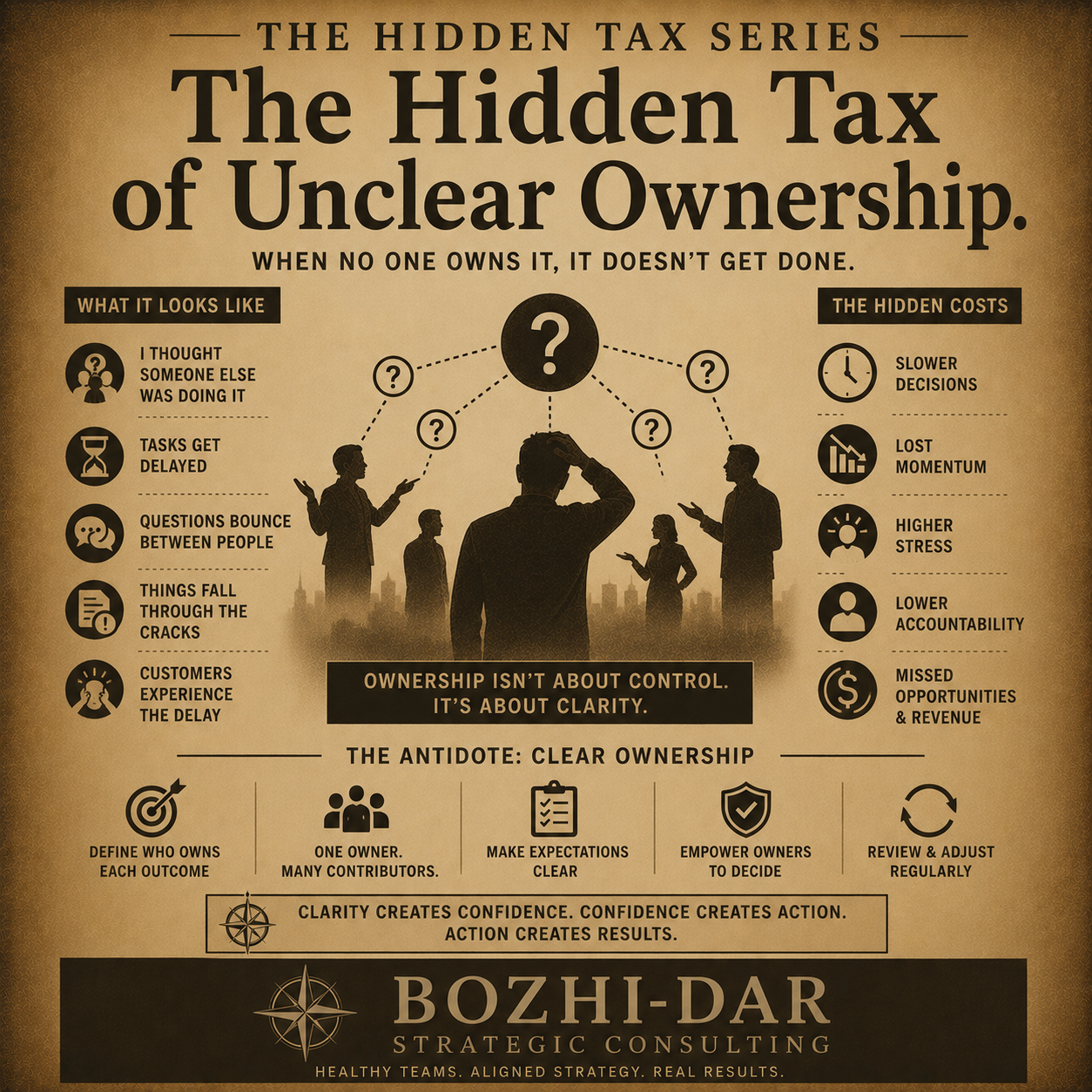
The Hidden Tax of Unclear Ownership
Some of the most expensive words in business are:
"I thought someone else was doing it."
Nobody intended for the work to be missed.
Nobody deliberately avoided responsibility.
Everyone assumed someone else owned it.
That's the hidden tax.
Unclear ownership doesn't usually create dramatic failures.
It creates small ones.
Tasks are delayed.
Customers wait longer.
Projects lose momentum.
Decisions stall.
Questions bounce from one person to another.
Each delay feels insignificant.
Together, they become expensive.
Many organizations believe assigning work is the same as assigning ownership.
It isn't.
A task can have ten contributors.
It should still have one owner.
Ownership answers a simple question:
Who makes sure this gets done?
Without that answer...
Work starts drifting.
When ownership isn't clear, people naturally protect themselves.
"I wasn't responsible."
"I didn't know."
"I thought they were handling it."
The problem isn't effort.
It's ambiguity.
Clear ownership creates confidence.
People know where decisions belong.
Questions find answers quickly.
Customers receive consistent service.
Teams spend less time asking who should act...
And more time creating value.
One of the simplest questions a leader can ask is:
"Who owns this?"
If the room becomes quiet...
You've just discovered a hidden tax.
Healthy organizations don't depend on constant follow-ups.
They depend on clear accountability.
Not to create blame.
To create movement.
Ownership isn't about control.
It's about clarity.
When everyone understands where responsibility begins and ends...
The business moves faster.
Not because people work harder.
Because fewer decisions become stuck between people.
Every business has hidden taxes.
Unclear ownership is one of the easiest to overlook.
Not because people don't care.
Because everyone assumes someone else does.
The strongest organizations don't have perfect people.
They have clear ownership.
And clarity scales.
Confusion doesn't.
Hidden taxes rarely appear on financial statements.
They appear in slower decisions, higher stress, missed opportunities, and limited growth.
The earlier you uncover them, the cheaper they are to remove.

